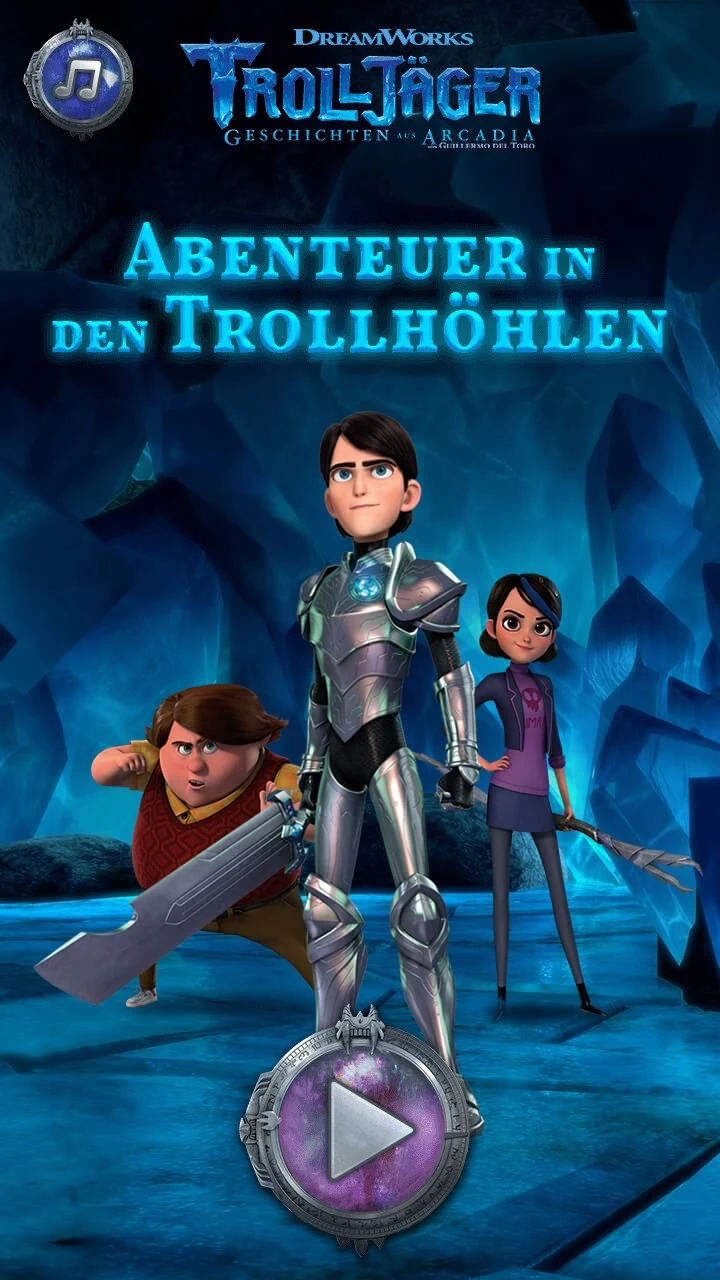
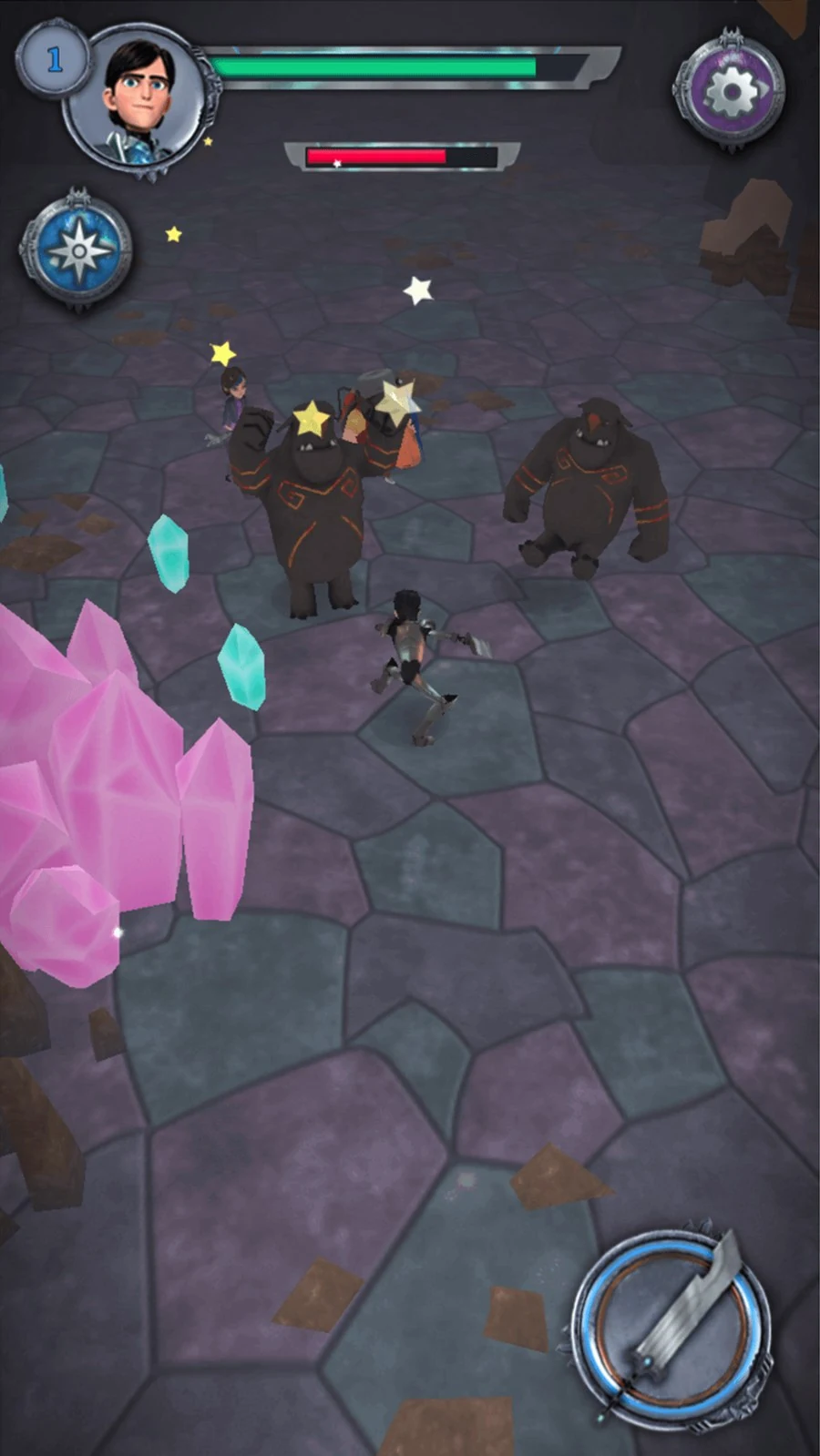
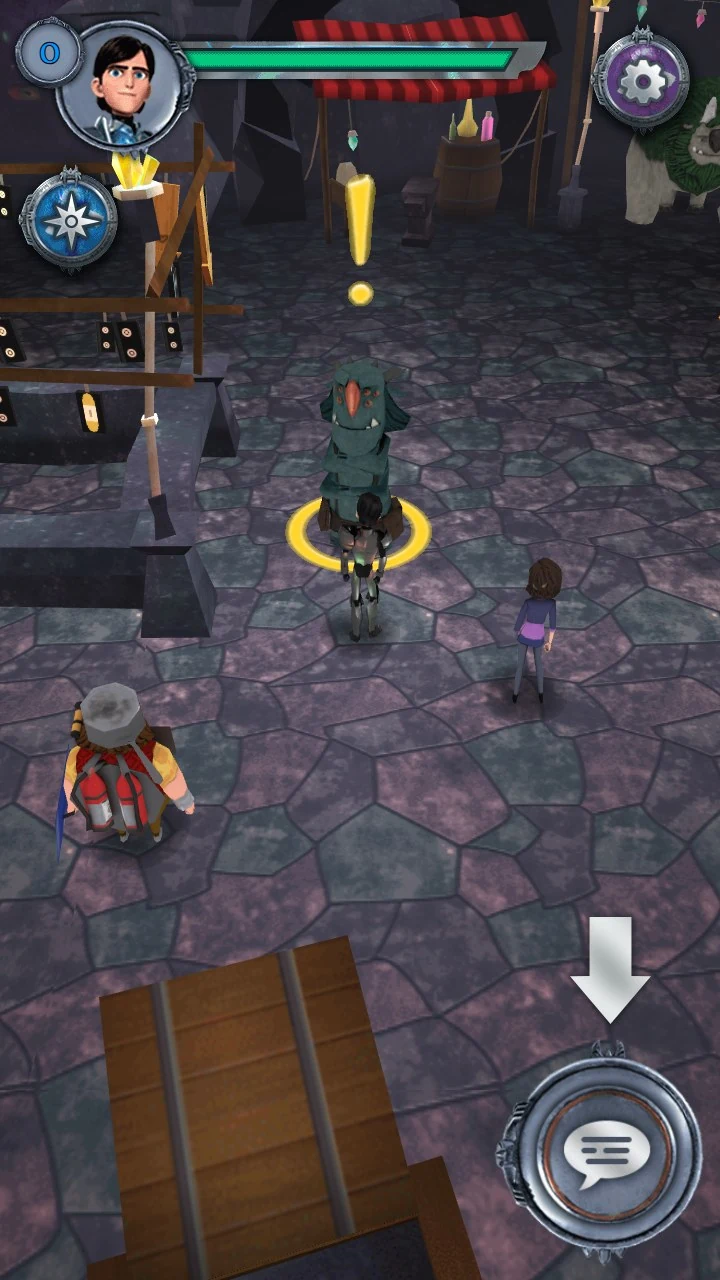
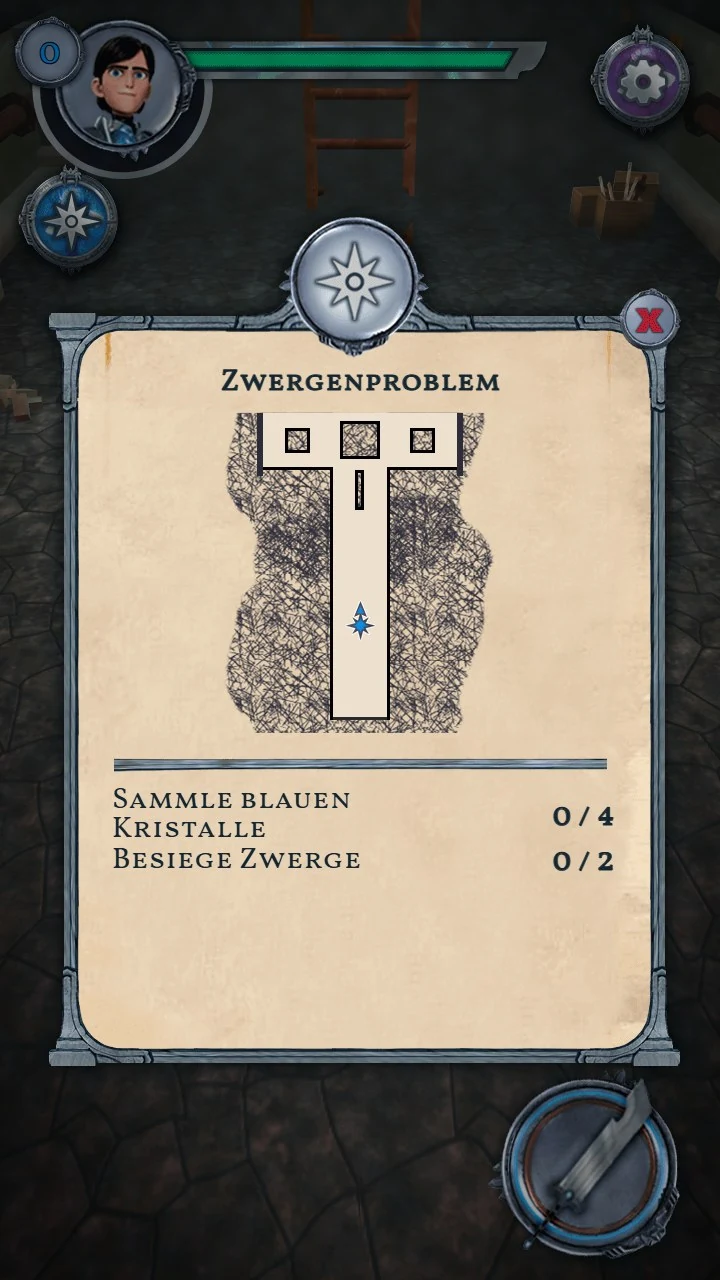
Screens © DreamWorks Animation.
Take control of Jim, the human chosen by Merlin's amulet to protect all of Human- and Trollkind. Go on an adventure along with Claire and Toby to hunt trolls. Trolljäger: Abenteuer in den Trollhöhlen is an action RPG hack-and-slash dungeon crawler. The player gets to play several story and side quests. Jim can be levelled up and unlocks his armour along the way. This game is from SRTL and is developed by Flying Sheep Studios. It is a cross-platform HTML5 game created using the Three.js and Phaser libraries.
In-game Content Recommender
Players play the same game in different ways and have different fighting styles. A designer creating fixed progression has to guess at an average player who doesn't quite exist, and everyone gets a version tuned for somebody else.
The machine learning solution treats this as a recommendation problem instead of a difficulty curve. Play behavior becomes the signal, and the model predicts which content a given player is likely to want next, so the game leans towards combat for someone who fights and towards discovery for someone who wanders. The underlying technique is a convolutional filtering-based recommender system, the same family of methods behind recommender systems generally applied to game content rather than films or products.
The game itself ran in the browser on the studio's Three.js-based engine. The model lived behind a custom back-end written in Golang and Python. Python for the neural network algorithms powered by TensorFlow; Golang for the custom matrix and tensor factorization-based algorithms and the backend service in front of it.
The Research
This work came out of my master's thesis in Media Informatics at RWTH Aachen, on the computer graphics and machine learning side. It went on to become two peer-reviewed publications. Check out the easy-to-follow blog post.
Matrix and Tensor Factorization Based Game Content Recommender Systems: A Bottom-Up Architecture and a Comparative Online Evaluation at AIIDE 2018, and Matrix- and Tensor Factorization for Game Content Recommendation in KI 2019.
I presented it three times over 2019 as In-game Content Generation using Machine Learning at Develop:Brighton in July, at the Serious Play Conference at University of Central Florida, and again at Game Dev Days Graz.